

Why Companies Should Hire a Video Team for Conferences and Trade Shows
A conference booth can take months to plan and only a few days to use. The buildout, travel, staff time, product prep, samples, demos, signage, and sponsorships all add up quickly. Yet many companies leave with only a few phone photos, scattered notes, and memories of conversations that are hard to recreate.
That is a missed opportunity.
Conferences and trade shows are some of the most visual, high-energy moments a company can create. Products are on display. Team members are interacting with real people. Prospects are asking questions. Partners are stopping by. The company’s presence is physical, active, and full of proof.
A skilled video team helps capture that value while it is happening. Instead of treating the event as a one-time expense, video turns it into a source of content, sales support, recruiting material, internal communication, and long-term brand storytelling.
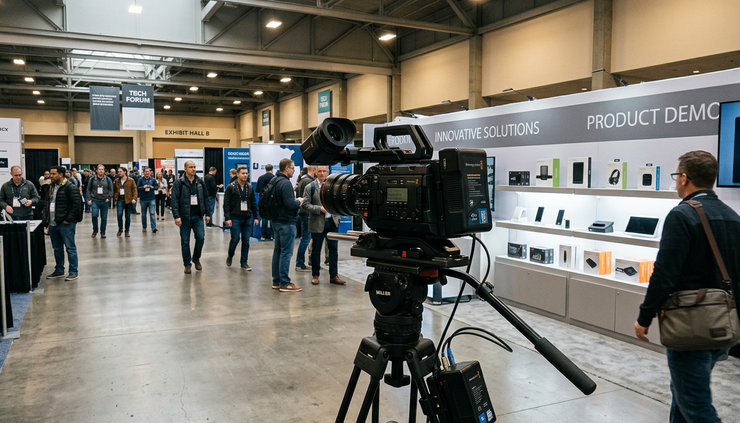
Video increases engagement and visibility during the event
Trade shows are crowded. Every aisle competes for attention. Booths use lights, samples, screens, demos, giveaways, and live conversations to pull people in. Video adds another layer of energy, both during the event and after it.
A video team does more than record what is in front of them. They look for movement, emotion, reactions, and moments that show why people should care. That might include:
A product demo drawing a crowd
A close-up of hands using the product
A team member explaining a feature to a visitor
Attendees reacting to a sample or experience
A steady shot of the booth from across the aisle
Quick clips of setup, traffic, and booth activity
These moments give the event a sense of life. They help people who were not there understand what happened, why it mattered, and what the company brought to the show.
Video also supports visibility while the event is still happening. Short clips can often be reviewed and prepared for posting during or shortly after the show. Even simple footage of booth activity can remind attendees to stop by, help partners see that the company is active on the floor, and give sales teams something timely to share.
A booth that looks active attracts more attention. People notice where other people gather. Video helps capture that energy and extend it beyond the physical space.
For companies that invest in sponsorships, speaking opportunities, display areas, or product launches, this matters even more. The event presence should not disappear once the booth is packed up. Video helps preserve it and makes it easier for others to see the value of the investment.
Event video creates lasting content for marketing and sales
One of the strongest reasons to hire a video team is simple: the content continues working long after the event ends.
A conference may last two or three days, but the footage can support marketing for months. A good video team captures more than a highlight reel. They gather raw material that can be shaped into many useful assets, such as:
Recap videos for the company website
Short clips for email campaigns
Product demo snippets
Customer or partner sound bites
Sales follow-up videos
Recruitment content
Internal updates for teams that could not attend
Behind-the-scenes clips
Event landing page content
This gives companies more value from the same event budget. Instead of creating separate content from scratch later, the team can use real footage from a live environment.
That matters because trade show footage often feels more believable than staged content. Real conversations, live demos, natural reactions, and booth traffic add context. Viewers can see that the company showed up, answered questions, and engaged with the market.
Video also gives sales teams a practical tool. After the event, representatives can send a short recap to prospects who visited the booth. They can share a demo clip with someone who missed the show. They can remind a buyer of what they saw in person. That kind of follow-up feels more specific than a generic brochure.
Marketing teams benefit as well. A single event can produce content for newsletters, website sections, product pages, recruiting campaigns, and future event promotions. The footage becomes a content library, not just a souvenir.
Video shows products and services more clearly than static materials
Some products are hard to explain with a photo. Some services are hard to understand from a one-line description. At conferences and trade shows, people often need to see something in use before it clicks.
Video is especially useful when a company needs to show:
How a product moves or functions
What happens before and after use
How simple the process is
How a service improves a workflow
What makes a feature different
How people interact with the product in real time
A still image can show the product. A video can show the experience.
For example, a manufacturer can show a machine part being handled, tested, or assembled. A software company can capture a screen walkthrough paired with a clear explanation. A food or beverage company can show sampling reactions. A medical device company can document a non-clinical product overview, when appropriate and compliant. A logistics provider can capture a physical display that explains its process.
This helps reduce friction. Instead of expecting prospects to imagine the value, video gives them something easier to understand.
A professional video team also knows how to capture details that casual footage often misses. They can frame the product clearly, record usable audio, adjust for harsh convention lighting, and avoid distracting background clutter. They can capture wide shots for context, mid shots for demonstrations, and close-ups for details.
That difference matters. Poor footage can make a strong booth look flat. Strong footage can make a complex product easier to understand.
A video team also helps the company stay present in the moment. Staff can focus on conversations instead of worrying about filming. That leads to better interactions and better content.
Video strengthens brand storytelling with real moments
Brand storytelling works best when it feels specific. Claims like “customer-focused” or “quality-driven” do not mean much unless people can see evidence. Conferences and trade shows provide that evidence.
At an event, a company’s story comes through in many ways:
How the team welcomes visitors
How clearly staff explain the product
How the booth looks and functions
How people respond to a demo
How leaders discuss the market
How customers or partners describe their experience
How the company shows its culture under pressure
A video team can connect these pieces into a clear narrative. The message is not only, “We attended this event.” The message becomes, “This is who we are, this is what we build, and this is why people are interested.”
That kind of storytelling is hard to create from stock visuals or generic copy. It comes from real footage, real conversations, and real context.
Strong event video can make a company feel more human. It shows the people behind the booth. It captures enthusiasm, expertise, and care. It shows effort. It also gives viewers a sense of scale, especially when the booth, product, or event presence is larger than what a photo can communicate.
This is useful for companies of many sizes. A startup can use video to show credibility and momentum. A growing company can show market demand. An established company can show leadership and stability. A company launching something new can show excitement around the release.
The story does not need to be dramatic. It needs to be clear, honest, and well shot.

Video helps attract potential clients and partners
Conferences and trade shows are built around connection. Companies attend to meet buyers, distributors, suppliers, investors, media contacts, industry peers, and future partners. Video helps support those connections before, during, and after the event.
Before the event, companies can use video from past shows to build interest. A strong recap from the previous year can help announce attendance, invite meetings, and show what visitors can expect. This gives outreach more substance.
During the event, video can help draw attention to booth activity. If the company is hosting demos, product previews, interviews, or special guest appearances, short clips can help spread the word.
After the event, video becomes part of the follow-up process. Prospects who visited the booth may not remember every conversation, especially after walking a large show floor. A short, polished video can bring the experience back. It can help them recall the product, the team, and the value discussed.
For partners, video can show professionalism and commitment. A company that documents its presence well often appears more prepared. It signals that the event mattered, the audience mattered, and the company came ready to participate.
This can also help with stakeholders who did not attend. Leadership teams, board members, franchisees, regional sales teams, or remote employees can see the event through a polished recap. That creates internal alignment and helps justify future event spending.
The right video can turn a brief booth visit into a stronger business touchpoint. It gives prospects and partners something to revisit, share, and discuss.
A professional team captures what phones cannot
Smartphones are useful, and they have a place at events. Quick behind-the-scenes clips, casual updates, and simple snapshots can all help. But a phone in the hands of a busy team member is not the same as dedicated video coverage.
A professional video team brings planning, equipment, and an editorial eye. They know how to work inside crowded venues where lighting changes, audio is messy, and time is limited. They know how to capture footage without interrupting staff or visitors. They also understand how to tell a complete story, not just collect random clips.
A strong event video plan usually includes:
A shot list tied to business goals
Key products or services that need coverage
Planned interview subjects
Important booth moments
Sponsor or display areas that should appear on camera
Delivery needs for short clips, recaps, or internal videos
Brand and compliance guidelines where needed
This planning helps the team capture the right material. Without it, companies often leave with footage that misses the best moments or cannot be edited into anything useful.
Professional audio also makes a major difference. Trade show floors are noisy. A camera may capture beautiful footage, but if viewers cannot hear the speaker, the clip loses value. Video teams use microphones and recording methods that improve clarity, especially for interviews and demos.
Editing matters too. The final product should have pace, structure, and purpose. A good video team can shape hours of event footage into a concise piece that people will actually watch. They can also create shorter versions for different uses.
That is where the investment pays off. The company does not just get footage. It gets usable content.
What companies should capture at a conference or trade show
The best event videos come from clear priorities. Before hiring a video team, companies should decide what success looks like. A launch video needs different footage than a sales recap. A partner-focused video may need interviews. A recruitment piece may focus more on team energy and culture.
Here are the core elements worth capturing.
The booth presence
The booth is the physical center of the event. Video should capture wide shots, visitor flow, product displays, demos, and details that show the company’s investment. This helps document scale and quality.
Product and service demonstrations
Demos often create the most useful footage. They show what the company does in a direct, visual way. Even short clips can support later sales conversations.
Team interactions
Natural conversations show expertise and approachability. Footage of the team answering questions or walking visitors through a product helps make the company feel accessible.
Customer and partner perspectives
When appropriate, short interviews or informal comments can add credibility. These should be planned with permission and handled professionally.
Event atmosphere
A few shots of the venue, attendee movement, and surrounding activity help give the video context. The goal is to show that the company was part of a larger industry moment.
The return comes from using the footage well
Hiring a video team is only part of the strategy. Companies get the most value when they plan how they will use the footage before the event begins.
A clear plan might include:
A short recap for the website
Several clips for post-event follow-up
Product-specific edits for sales teams
A version for internal communication
Raw selects archived for future use
Still frames pulled from the footage when quality allows
This approach turns one event into many content opportunities. It also helps the video team shoot with purpose. If the company needs a 60-second recap, the team can capture broad event energy. If sales needs product clips, the team can focus on demos and explanations. If leadership needs proof of booth traffic and activity, the team can make sure those shots are covered.
The best results happen when marketing, sales, and event teams align before the show. Everyone should know what the video needs to accomplish.
A conference or trade show is more than a booth rental and a badge scan. It is a rare chance to show the company in motion, with products, people, and prospects all in the same place. A video team preserves that moment and turns it into content that keeps working after the floor closes.
Companies that invest in video coverage gain more than a recap. They gain clearer product communication, stronger storytelling, better follow-up tools, and a more visible event presence. When the next conference comes around, they also have proof of what they built, who they reached, and why the investment mattered.


Comments